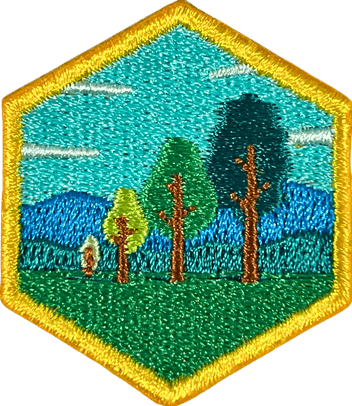
Forestry
From Discover to Reflect
Every Saints Global badge follows the same arc — learn it, plan it, do it, then reflect on what changed.
- Step 1 · DISCOVER
Discover
Learn what this badge is really about.
Identify at least 15 species of trees, shrubs, or vines in a local forested area and explain key identifying features and habitats for each.
Explain how at least five of the identified species are used by humans or wildlife, noting whether they are native or invasive.
- Step 2 · PLAN
Plan
Get ready — gather what you need.
Choose one forest study focus (wood use, growth patterns, or forest damage) and plan how you will examine and document real examples in the field.
Explain how forests contribute to clean air, water, soil health, wildlife habitat, and community well-being.
- Step 3 · ACT
Act
Do the work, in the real world.
Complete your chosen forest study by collecting samples, examining growth rings, or identifying damage, and explain your findings.
Visit a managed forest, logging operation, wood-processing facility, or forestry professional and explain how forest management decisions are made.
Inventory potential hazardous trees in a camp, park, or neighborhood area and suggest appropriate remedies.
Participate in a forestry-related service or prevention activity such as wildfire prevention, conservation work, or public education.
- Step 4 · REFLECT
Reflect
Look back and see what changed.
Explain how mismanagement or neglect can damage forest ecosystems and what responsible stewardship looks like in practice.
Describe how learning forestry principles influences how you interact with and care for natural spaces.
Take it with you
Download the official sheets — bring them to council meetings, advisor check-ins, and badge submissions.
Requirements Sheet
Printable BRC checklist for the Saint to track and submit.
DownloadLeader Guide
Teaching outline, lesson prep, and discussion notes.
DownloadActivity Pack
Hands-on activities and printables to pair with the requirements.
DownloadJunior Activity Pack
Single-session Junior Saints activities and printables.
DownloadGold Card
Wallet-sized completion summary for the sash holder.
DownloadLeader Key
Verification criteria and answer key for advisors.
DownloadKeep building
For the Saint who learns to work with their hands and hold their own outdoors.




















Log requirements in the portal
Members track progress, submit completion, and request advisor sign-off through the Saints Global member portal.