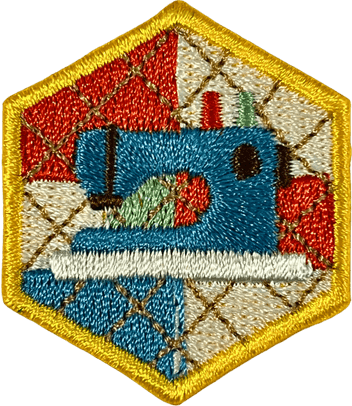
Sewing
To develop practical textile knowledge and hands-on skill by identifying fibers and fabrics, understanding how textiles are made, and demonstrating construction, dyeing, and care practices with attention to stewardship and ecological impact.
From Discover to Reflect
Every Saints Global badge follows the same arc — learn it, plan it, do it, then reflect on what changed.
- Step 1 · DISCOVER
Discover
Learn what this badge is really about.
Explain why textiles matter in daily life and define the terms fiber, fabric, and textile, giving examples you use every day.
Collect fabric samples: two natural fiber fabrics (100% cotton/linen/wool/silk), two synthetic fabrics (nylon/polyester/acrylic/olefin/spandex), and one cellulosic manufactured fabric (rayon/acetate/lyocell).
Explain the origin, characteristics, and content of each collected fiber, including the difference between cellulosic manufactured fibers and synthetic manufactured fibers.
- Step 2 · PLAN
Plan
Get ready — gather what you need.
Describe the main steps of making raw fiber into yarn and yarn into fabric, and explain how woven, knitted, and nonwoven constructions differ.
Choose a textile item you might purchase soon and justify the fiber or blend you would choose based on purpose, comfort, durability, cost, and care.
- Step 3 · ACT
Act
Do the work, in the real world.
Complete two hands-on textile skill activities from the following: weaving on a simple self-made loom, making felt, creating and using natural dyes, waterproofing fabric, or fiber identification (microscope/break test).
- Choose two approved options and explain why you chose them
- Demonstrate correct technique and safe tool/chemical use
- Show the finished result and explain what worked and what you would change
- Explain how the process affects fabric performance (strength, texture, water resistance, colorfastness)
Using a magnifying glass or close-up photos, examine and sketch one woven, one knitted, and one nonwoven fabric, then explain the structural differences you observe.
Explain the meaning of at least 10 textile terms relevant to your projects (e.g., warp, loom, spindle, cellulose, staple, worsted, nonwoven, spinneret, extrusion, sericulture).
Compare fiber categories (plant, animal, cellulosic manufactured, synthetic) by listing advantages/disadvantages and discussing at least four ecological concerns related to textile production and care.
- Provide one advantage and one disadvantage for each category
- Identify at least four ecological concerns (water use, chemicals, microplastics, labor/ethics, land use, energy, waste)
- Explain one personal habit that reduces textile impact
- Step 4 · REFLECT
Reflect
Look back and see what changed.
Identify five careers in textiles and describe two that interest you, including education/training, costs, and typical duties.
Take it with you
Download the official sheets — bring them to council meetings, advisor check-ins, and badge submissions.
Requirements Sheet
Printable BRC checklist for the Saint to track and submit.
DownloadLeader Guide
Teaching outline, lesson prep, and discussion notes.
DownloadActivity Pack
Hands-on activities and printables to pair with the requirements.
DownloadJunior Activity Pack
Single-session Junior Saints activities and printables.
DownloadGold Card
Wallet-sized completion summary for the sash holder.
DownloadLeader Key
Verification criteria and answer key for advisors.
DownloadKeep building
For the Saint who learns to think clearly and judge wisely.









Log requirements in the portal
Members track progress, submit completion, and request advisor sign-off through the Saints Global member portal.