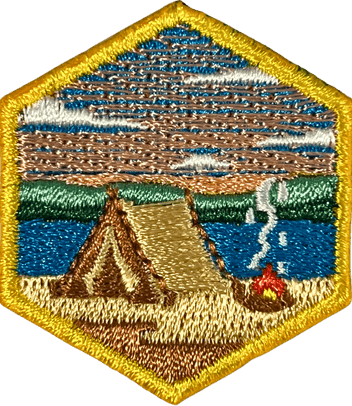
Camping
The Camping badge forms the foundation of outdoor self-reliance. Saints learn to live safely, responsibly, and cooperatively outdoors while practicing stewardship, preparedness, and leadership in overnight settings.
From Discover to Reflect
Every Saints Global badge follows the same arc — learn it, plan it, do it, then reflect on what changed.
- Step 1 · DISCOVER
Discover
Learn what this badge is really about.
Explain common camping hazards and how to anticipate, prevent, mitigate, and respond to them.
Explain why monitoring weather is important before and during campouts and how to prepare for bad weather.
Explain and demonstrate first aid and prevention for common camping injuries and illnesses.
- Cold- and heat-related conditions
- Dehydration and altitude sickness
- Insect stings, tick bites, and snakebite
- Blisters and hyperventilation
- Step 2 · PLAN
Plan
Get ready — gather what you need.
Explain the Leave No Trace Seven Principles and the Outdoor Code, then write a personal and group plan to apply them on a campout.
Create a written plan for an overnight campout and show how to reach the campsite using a map and compass, GPS, or smartphone app.
- Step 3 · ACT
Act
Do the work, in the real world.
Create a duty roster for an overnight campout and help a younger patrol or unit prepare for their campout.
Prepare clothing, footwear, and outdoor essentials for warm and cold weather and present your packed gear for inspection.
With another Saint, pitch a tent and select a proper campsite.
Demonstrate water treatment, camp sanitation practices, and safe food storage.
Plan and cook meals on a campout using appropriate stoves, demonstrating safe fuel handling and cleanup.
- Step 4 · ACT
Act
Do the work, in the real world.
Participate in at least 20 nights of outdoor camping and complete at least two qualifying outdoor adventure activities with proper supervision.
Participate in a conservation or service project during a camping experience.
- Step 5 · REFLECT
Reflect
Look back and see what changed.
Discuss how camping has taught you about health, safety, conservation, citizenship, and personal responsibility.
Take it with you
Download the official sheets — bring them to council meetings, advisor check-ins, and badge submissions.
Requirements Sheet
Printable BRC checklist for the Saint to track and submit.
DownloadLeader Guide
Teaching outline, lesson prep, and discussion notes.
DownloadActivity Pack
Hands-on activities and printables to pair with the requirements.
DownloadJunior Activity Pack
Single-session Junior Saints activities and printables.
DownloadGold Card
Wallet-sized completion summary for the sash holder.
DownloadLeader Key
Verification criteria and answer key for advisors.
DownloadKeep building
For the Saint who learns to work with their hands and hold their own outdoors.





Log requirements in the portal
Members track progress, submit completion, and request advisor sign-off through the Saints Global member portal.