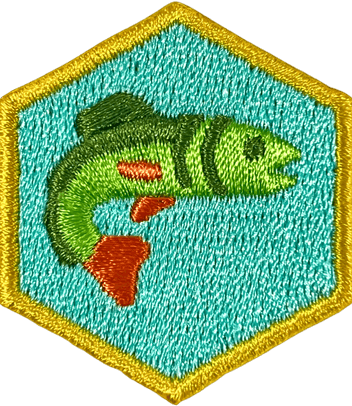
Fishing
To develop safe outdoor skill, stewardship of water resources, and competent angling through practical fishing preparation, ethical practice, and successful catch, handling, and (when lawful) cooking.
From Discover to Reflect
Every Saints Global badge follows the same arc — learn it, plan it, do it, then reflect on what changed.
- Step 1 · DISCOVER
Discover
Learn what this badge is really about.
Explain the most likely fishing hazards (water, hooks, weather, wildlife, sharp tools) and demonstrate how you will prevent and respond to them.
Demonstrate first-aid responses for common fishing injuries and illnesses, including cuts, punctures, insect bites, sunburn, dehydration, heat illness, and hypothermia.
Explain and demonstrate a safe method for removing a barbed hook from skin using an approved technique under leader guidance (simulation is acceptable).
Explain five safety practices you will always follow while fishing, including safe casting, spacing, and respect for property and regulations.
- Step 2 · PLAN
Plan
Get ready — gather what you need.
Compare two fishing outfits (rod/reel/line) and explain when each is best used, including basic care for the equipment.
Plan a lawful fishing outing by reviewing local regulations (license, seasons, limits, bait rules) and describing what the rules protect and why.
Prepare a simple tackle plan for the outing, selecting knots, hooks/lures/baits, and landing tools appropriate to the target fish and water type.
- Step 3 · ACT
Act
Do the work, in the real world.
Demonstrate the proper use of two different types of fishing equipment in the field (e.g., spinning gear and bobber rig, or spinning gear and lure presentation).
- Rig both setups correctly and safely
- Cast with safe spacing and communication
- Adjust presentation based on water conditions
- Explain what you changed and why
Tie and use five essential knots in a real rigging context: improved clinch, Palomar, uni, uni-to-uni, and arbor.
- Tie each knot cleanly without slipping
- Explain when each knot is the best choice
- Use at least two of the knots on live rigs during the outing
- Demonstrate line trimming and tag management for safety
Identify and use at least five artificial lures and five natural baits appropriate to local fishing, and explain safe, lawful handling of bait and baitfish.
- Name and identify the lures and baits
- Explain how each is presented
- Describe why baitfish are not released and how to follow local rules
- Demonstrate safe hook handling and disposal of used bait
Catch at least one fish lawfully, identify it, and demonstrate ethical handling and release or keeping procedures according to regulations.
- Identify the fish using at least two physical traits
- Handle fish with wet hands or appropriate tools to reduce harm
- Remove the hook safely or cut the line when appropriate
- Release properly OR keep and store the fish lawfully
If regulations and health conditions permit, clean and cook a fish you caught OR prepare a legally acquired fish using safe hygiene and food handling.
- Demonstrate safe knife handling and workspace cleanliness
- Clean the fish with correct technique and proper disposal
- Cook the fish to safe doneness using an appropriate method
- Explain one hygiene practice you followed to prevent illness
- Step 4 · REFLECT
Reflect
Look back and see what changed.
Explain how Leave No Trace principles, sportsmanship, and obedience to regulations protect fishing resources and other people.
Describe what you learned about patience, self-control, and gratitude while fishing, and identify one way you can use this skill to serve others.
Take it with you
Download the official sheets — bring them to council meetings, advisor check-ins, and badge submissions.
Requirements Sheet
Printable BRC checklist for the Saint to track and submit.
DownloadLeader Guide
Teaching outline, lesson prep, and discussion notes.
DownloadActivity Pack
Hands-on activities and printables to pair with the requirements.
DownloadJunior Activity Pack
Single-session Junior Saints activities and printables.
DownloadGold Card
Wallet-sized completion summary for the sash holder.
DownloadLeader Key
Verification criteria and answer key for advisors.
DownloadKeep building
For the Saint who learns to think clearly and judge wisely.

















Log requirements in the portal
Members track progress, submit completion, and request advisor sign-off through the Saints Global member portal.