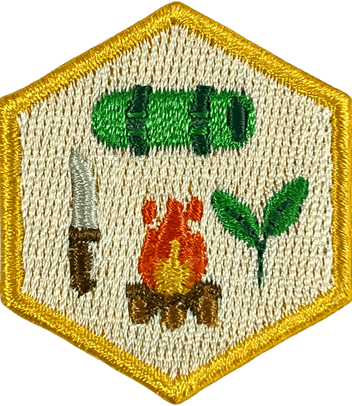
Wilderness Survival
To develop resilience, discipline, and life-preserving judgment through rigorous wilderness survival skills, moral self-control, and dependence on preparation, knowledge, and calm decision-making under stress.
From Discover to Reflect
Every Saints Global badge follows the same arc — learn it, plan it, do it, then reflect on what changed.
- Step 1 · DISCOVER
Discover
Learn what this badge is really about.
Explain the most likely wilderness hazards and demonstrate first aid and prevention for common backcountry injuries and illnesses.
From memory, list and explain the seven priorities for wilderness survival.
Explain techniques for avoiding panic and maintaining morale when lost, and why this directly affects survival outcomes.
- Step 2 · PLAN
Plan
Get ready — gather what you need.
Describe survival strategies for multiple exposure environments: cold/snowy, wet, hot/dry, windy, and aquatic settings.
Assemble a personal survival kit and explain the purpose of each item.
- Step 3 · ACT
Act
Do the work, in the real world.
Using three different non-match methods, build and light three controlled fires suitable for survival use.
- Prepare tinder, kindling, and fuel correctly
- Demonstrate spark-based, friction-based, and lens or battery-based ignition
- Maintain fire control and extinguish safely
Demonstrate signaling skills for rescue, including attention methods, signal mirror use, and ground-to-air signals.
- Demonstrate five attention-getting methods
- Use a signal mirror correctly on a target
- Recite and explain five ground-to-air signals
Improvise a low-impact natural shelter and spend one night in it under approved supervision.
- Select a safe site considering drainage and wind
- Construct shelter using minimal-impact techniques
- Maintain body heat and dryness overnight
- Leave the site restored
Demonstrate three methods for treating water collected in the outdoors for safe drinking.
- Boiling
- Chemical treatment
- Filtration or UV treatment
Demonstrate proper clothing selection for extreme heat, cold, and wet conditions, and explain why each choice matters.
- Step 4 · REFLECT
Reflect
Look back and see what changed.
Explain how respect for life, restraint, and humility guide decisions in a survival situation, including why eating wild plants or animals is usually unwise.
Take it with you
Download the official sheets — bring them to council meetings, advisor check-ins, and badge submissions.
Requirements Sheet
Printable BRC checklist for the Saint to track and submit.
DownloadLeader Guide
Teaching outline, lesson prep, and discussion notes.
DownloadActivity Pack
Hands-on activities and printables to pair with the requirements.
DownloadJunior Activity Pack
Single-session Junior Saints activities and printables.
DownloadGold Card
Wallet-sized completion summary for the sash holder.
DownloadLeader Key
Verification criteria and answer key for advisors.
DownloadKeep building
For the Saint who learns to work with their hands and hold their own outdoors.



















Log requirements in the portal
Members track progress, submit completion, and request advisor sign-off through the Saints Global member portal.