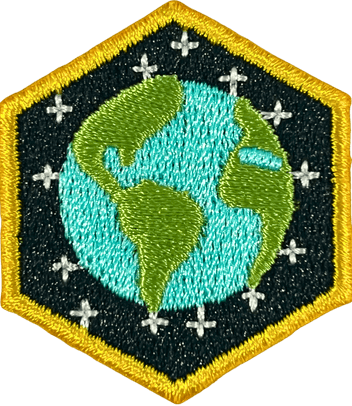
Earth Science
To develop informed environmental stewardship by applying earth science principles to real ecosystems, pollution challenges, conservation efforts, and human decision-making.
From Discover to Reflect
Every Saints Global badge follows the same arc — learn it, plan it, do it, then reflect on what changed.
- Step 1 · DISCOVER
Discover
Learn what this badge is really about.
Explain what environmental science means in your own words and how science can be used to understand, conserve, and improve the environment.
Observe an approved ecosystem over two days, noting living, nonliving, and formerly living components and their interactions, including human impact.
- Step 2 · PLAN
Plan
Get ready — gather what you need.
Investigate a local water source, how it is treated and disposed, and review a community water quality report.
Research air pollution impacts by either comparing transportation modes or studying the Clean Air Act and its outcomes.
- Step 3 · ACT
Act
Do the work, in the real world.
Research and present on a rare, threatened, or recovered species, including habitat, status, and conservation efforts.
- Prepare a 100-word written report
- Include a drawing or photo
- Present findings to a group
- Explain why conservation actions matter
Complete one hands-on conservation or pollution-prevention activity such as resource conservation, recycling documentation, hazardous waste identification, or pollination study.
- Choose one approved option
- Collect evidence or observations
- Explain environmental benefit
- Discuss possible improvements
Investigate two invasive species in your area, explaining origin, spread, impact, and control methods.
Conduct an experiment to test for particulate matter (PM) contributing to air pollution and explain findings.
Evaluate the environmental impacts of a proposed construction project, including purpose, alternatives, and consequences.
- Step 4 · REFLECT
Reflect
Look back and see what changed.
Identify three environmental or earth science careers and explain the training and preparation for one.
Take it with you
Download the official sheets — bring them to council meetings, advisor check-ins, and badge submissions.
Requirements Sheet
Printable BRC checklist for the Saint to track and submit.
DownloadLeader Guide
Teaching outline, lesson prep, and discussion notes.
DownloadActivity Pack
Hands-on activities and printables to pair with the requirements.
DownloadJunior Activity Pack
Single-session Junior Saints activities and printables.
DownloadGold Card
Wallet-sized completion summary for the sash holder.
DownloadLeader Key
Verification criteria and answer key for advisors.
DownloadKeep building
For the Saint who learns to think clearly and judge wisely.



Log requirements in the portal
Members track progress, submit completion, and request advisor sign-off through the Saints Global member portal.